
Entrepreneur · Software Developer · Data Scientist

Alex Limpaecher

I'm an entrepreneur, software developer, data scientist, product developer, and story structure enthusiast. I am the cofounder of the online qualitative analysis tool Delve!

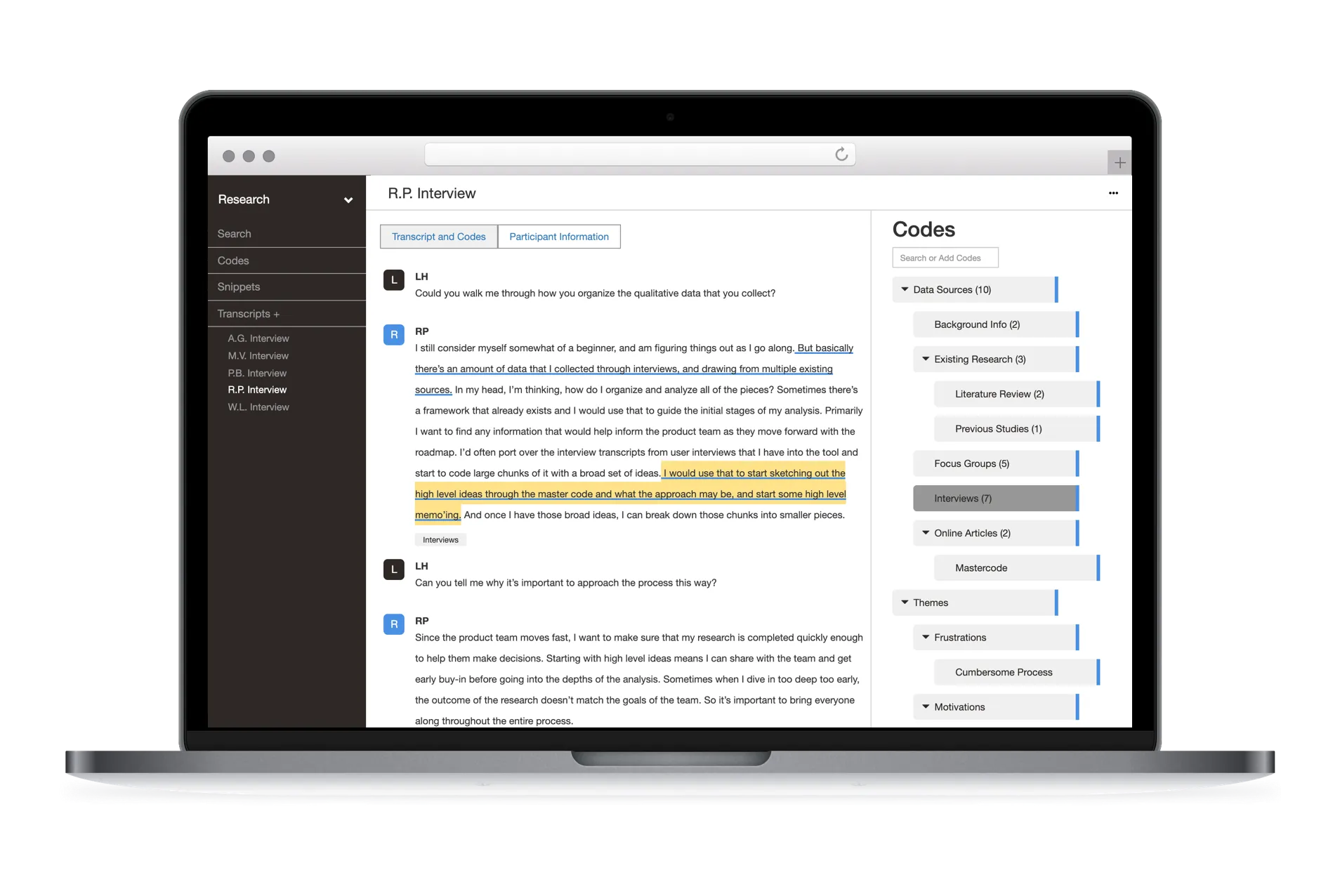
Screenshot of the Delve qualitative analysis tool

Current Project

Delve

Delve is an online tool for analyzing qualitative research: interviews, focus groups, and open-ended survey responses. My cofounder, LaiYee Ho, and I started it in 2017, frustrated that the existing tools felt built in the 1990s: aimed at enterprise buyers, not the researchers actually doing the work. We'd been getting by with spreadsheets and sticky notes on a wall. A wall of sticky notes is genuinely a joy, but capturing it properly is a slog. Delve keeps the joy and cuts the slog.

More than software, what we care about is making qualitative research accessible. The methods can feel intimidating, and people often don't know where to begin, so we write a free guide that turns dense concepts into something you can actually use (our explainers on grounded theory and thematic analysis are favorites), and share tutorials on our YouTube channel.

Today, thousands of researchers use Delve, and it's the top-rated qualitative analysis tool on Capterra, at 4.9 stars. But what I'm proudest of is that people tell us they genuinely enjoy using it. In an age where AI can reorganize and regurgitate what already exists, genuinely new insight still comes from humans going out into the world and discovering it. I want to make that work easier for as many people as I can.

Startup Years

Wink

As one of Wink's first 5 employees I played a crucial role in the growth of the company, running multiple different teams and initiatives. I founded both the Data Team and the Firmware Team, and managed the interdisciplinary Wink Services team.

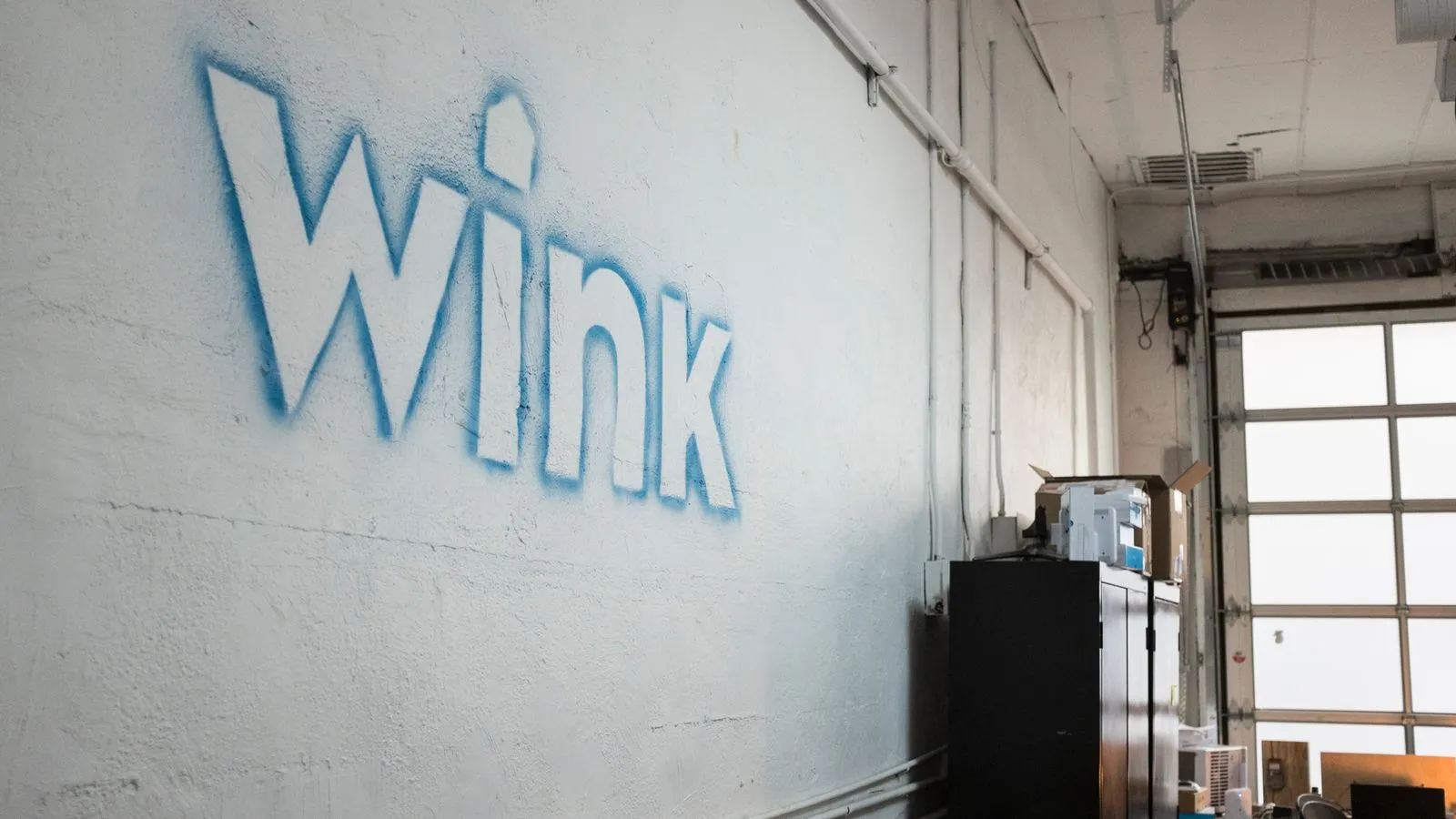
The Wink office

Wink Services Lead

Making the smart home smarter

I managed the Wink Services team, which was an interdisciplinary team of engineers, data scientists, designers, and researchers.

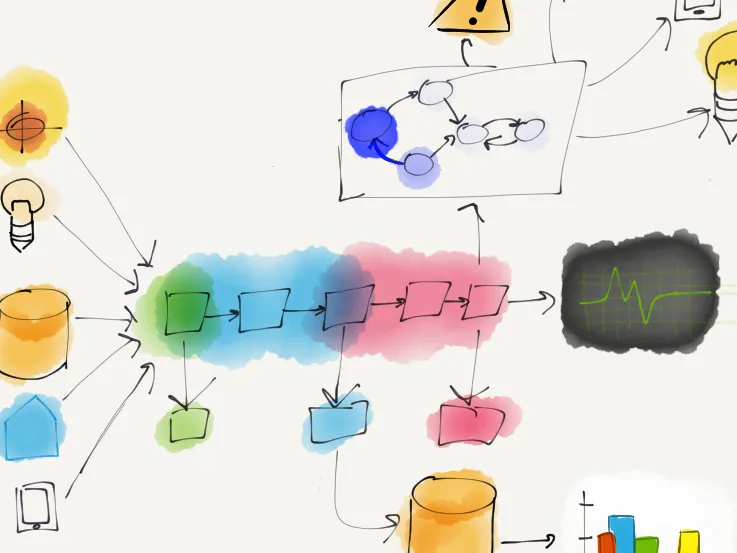
Whiteboard sketches of Wink's machine learning platform

Chief Data Officer

Building Wink's machine learning platform

I formed Wink's Data Science/Engineering team.

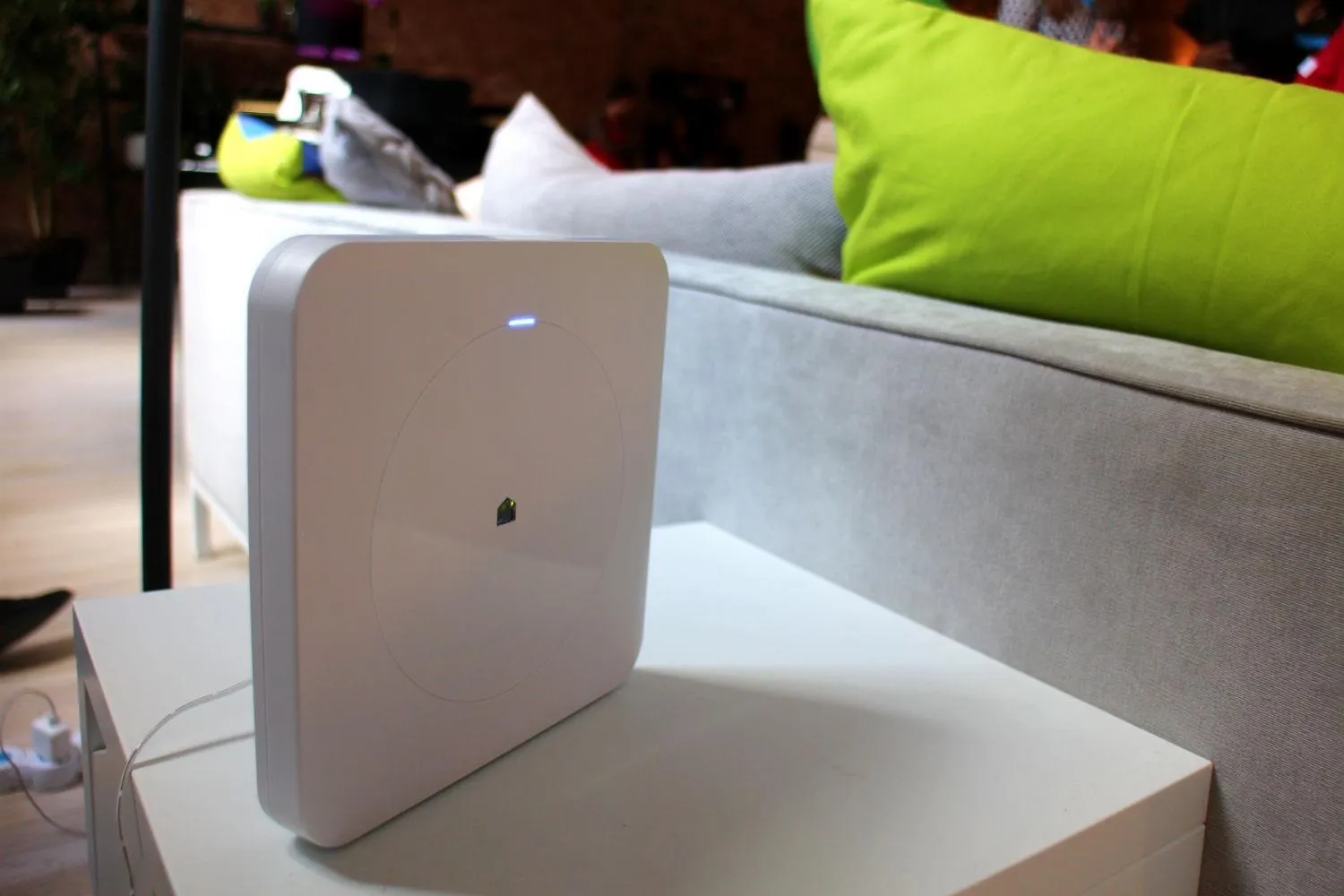
The Wink Hub

Interim Firmware Lead

The Wink Hub

From Feb 2014 until July 2014 I took a break from being Wink's Data Lead to be the Interim Firmware Lead. The Hub was Wink's first hardware product. It spoke a variety of different radio protocols including Bluetooth, ZWave, ZigBee, Lutron, Clear Connect, and Wifi, connecting dozens of different IoT products. The Wink Hub sold at Home Depot and was fundamental to Wink's success.

The original Wink iPhone app

iPhone Developer

The original Wink app

I worked on a 5 person team at Quirky to build an IOT platform for their smart products. Working primarily as an iOS developer, I collaborated with our Backend engineer and Experience designer to build out the Wink platform. Other hardware companies expressed interest in joining our platform. Wink spun off from Quirky, partnered with Home Depot and GE, and began integrating 3rd party IOT products onto our platform.

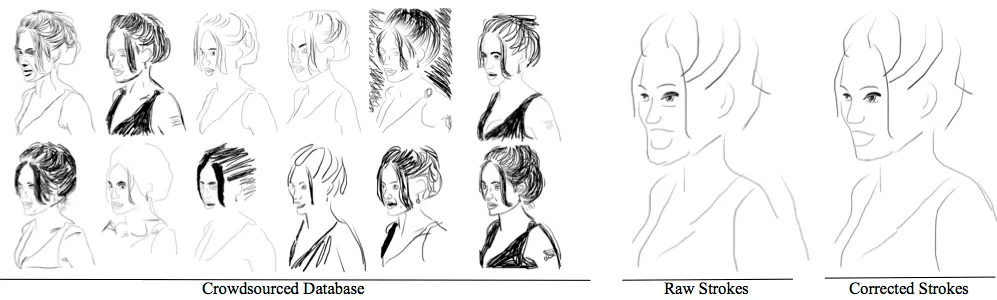
Crowdsourced sketches from the DrawAFriend research project

Academia

Research

I have worked at multiple prestigious research groups at Princeton, Carnegie Mellon, UC Berkeley, and Microsoft Research. My research focused on three, sometimes overlapping topics: art analytics, citizen science, and crowd-sourcing.

DrawAFriend

DrawAFriend is an iOS asynchronous turn-based social drawing and guessing game where players draw their Facebook friends and celebrities. It also doubles as a crowdsourcing research project, aimed at developing tools to help players draw better. I designed and built DrawAFriend, as well as developed the data-driven drawing algorithm which improves drawings in real time. DrawAFriend results were published in Siggraph 2013. Built for iOS using: Objective-C, Core Graphics, Core Data. SDKs: Facebook SDK, Parse backend, ChartBoost SDK, Flurry SDK, TestFlight SDK. Data-driven Auto-Drawing Algorithm developed with Python, implemented in Objective-C.
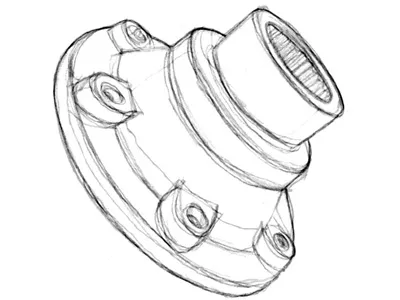
Artist line drawing of a 3D shape from the study

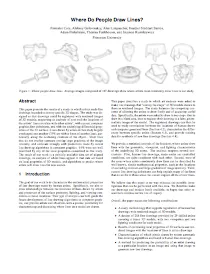
Where Do People Draw Lines?

The "Where Do People Draw Lines" research group aimed to mathematically understand where artists drew lines when drawing three-dimensional shapes. I helped design the experiment and organize the artist workshops where we collected 208 line drawings from twenty-nine skilled artists. I statistically analyzed these drawings and created algorithms that would predict where artists were likely to draw. With that analysis, I created new non-photorealistic rendering algorithms that leveraged the artist dataset. Where Do People Draw Lines was published in Siggraph 2008, and I received Outstanding Computer Senior Thesis. Tools used: Matlab, Python, R, Weka.

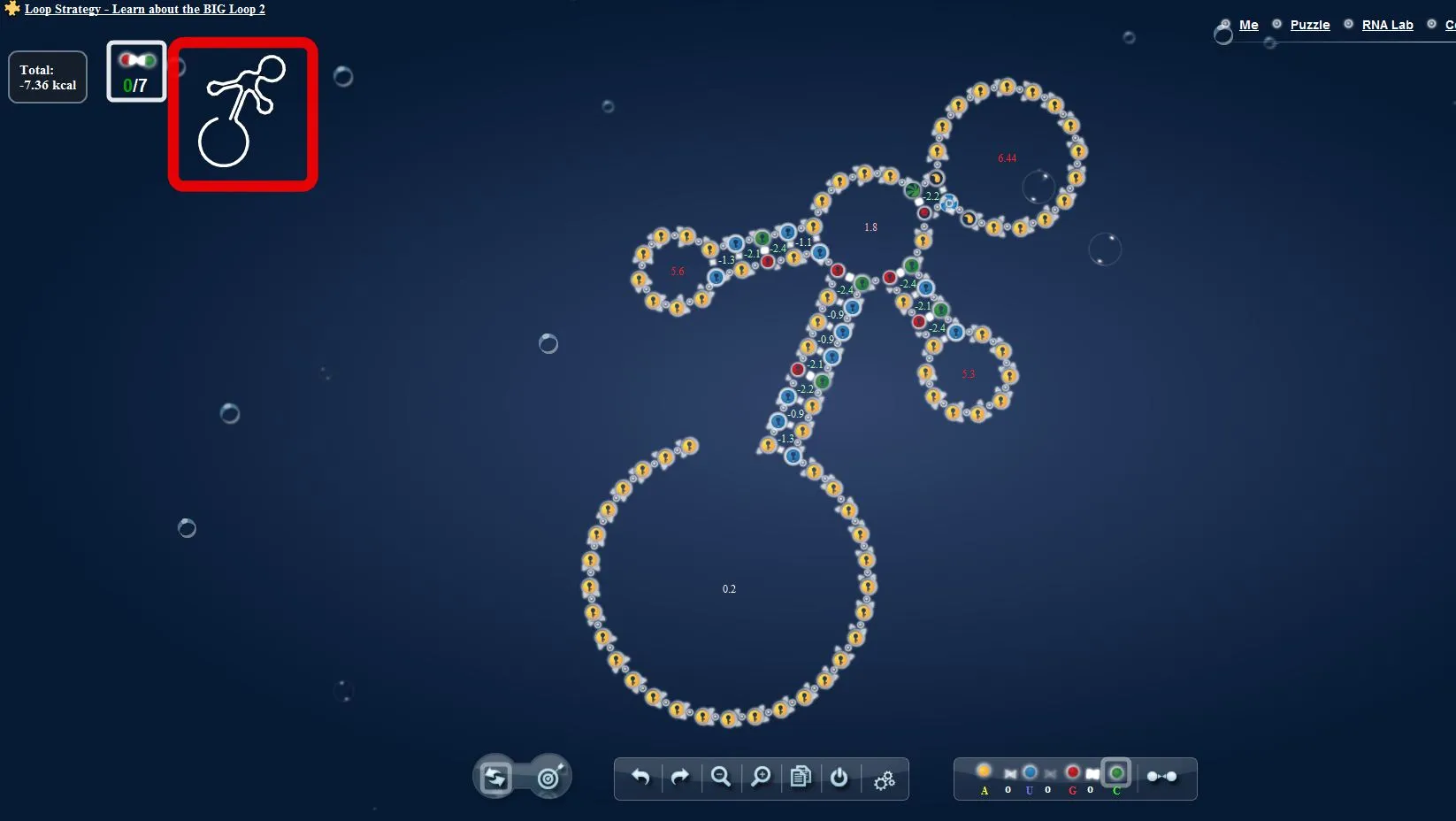
EteRNA citizen science game

Citizen Science

I collaborated with fellow grad students at CMU and Stanford to develop two Citizen Science Projects. The first project DrugDiscover, was an iPhone game that asked players to match two ligands (drug molecules). By finding similar matches, citizen scientist could help identify potential cures for diseases. The second was eteRNA, which "gamified" the science behind RNA molecules. People all over the world could submit RNA designs to solve challenges, and the top designs would be synthesized into real molecules. Players would get points based on how well the RNA folded in real life. The top strategies were distilled by machine learning into an algorithm, EteRNABot. EteRNABot significantly outperformed prior algorithms in a dozen RNA secondary structure design tests. The results of EterNA were published in PNAS 2014.

Microsoft Research logo

Microsoft Research

I worked at Microsoft Research Interactive Visual Media Lab for two summers as well as collaborated with my mentor Michael Cohen from 2010-2013. I worked on two primary projects, the first was a project called StreetHunt which was a side-scrolling GPS adventure that was built using street view images stitched together via computer vision algorithms. The second project was the prototype that became DrawAFriend. Tools used: OpenGL, Objective-C, Matlab, Silverlight, Microsoft Azure.

More

Additional Work Experience

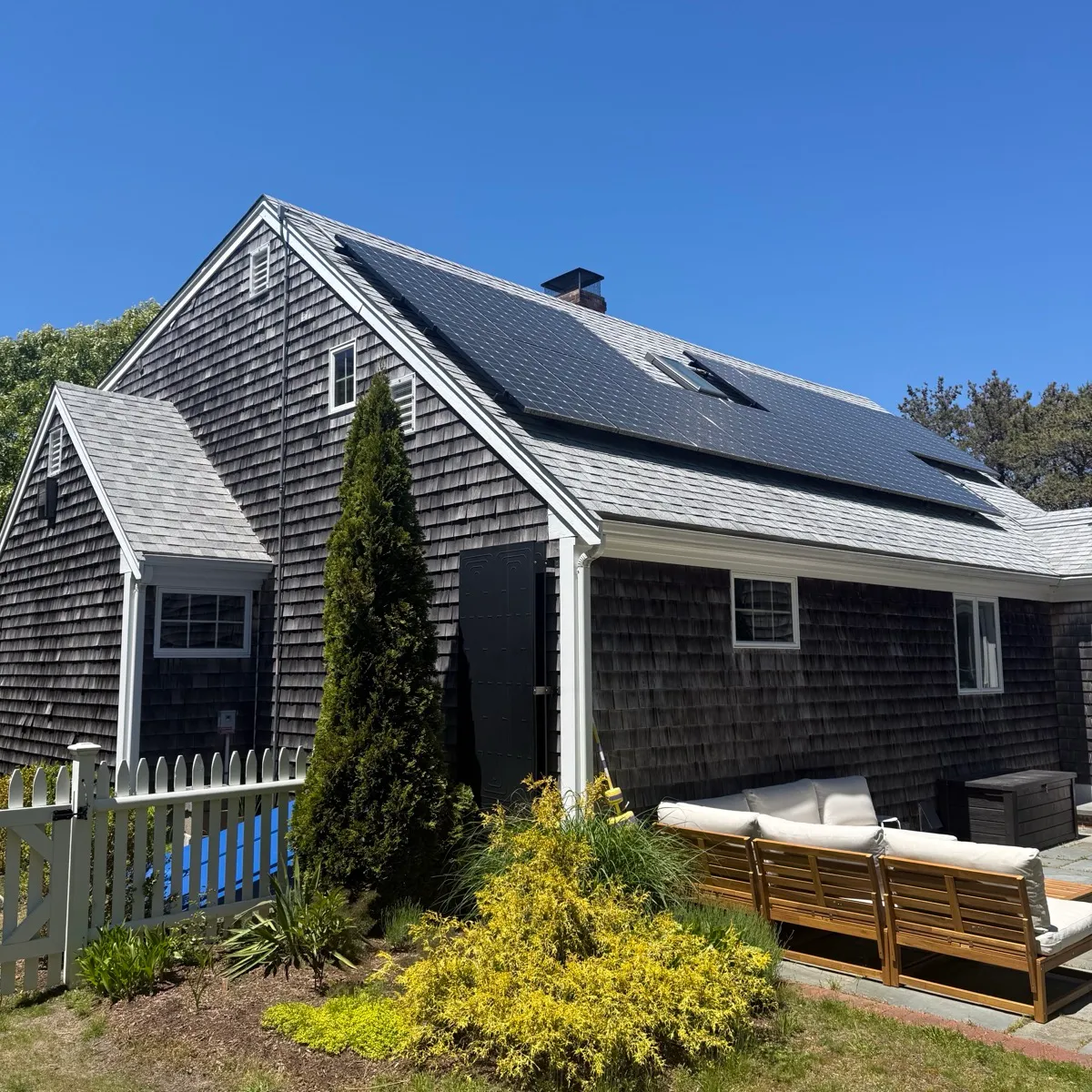
Cape Cod house with rooftop solar panels

Truro Climate Action Committee

I serve on the Truro Climate Action Committee, which investigates the town's carbon footprint and climate vulnerabilities and makes recommendations to the select board on strategies to minimize them.

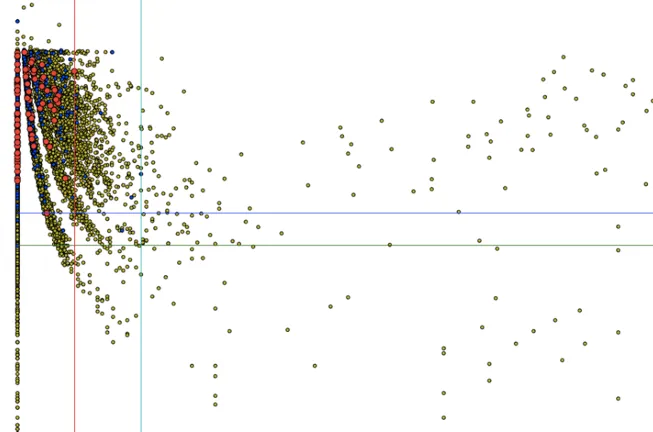
Scatter plot from Quirky's idea-filtering model

Machine Learning @ Quirky

I led the machine learning initiative at Quirky. Quirky was an invention platform that allowed anyone in the world to submit product ideas that got manufactured into real products. When I came aboard, thousands of ideas were being added each day, and filtering these ideas consumed hundreds of man hours a week. Using NLP, Naive Bayes, and Support Vector Machines, I developed a filter that could reject 32% of ideas with 100% accuracy on testing data. This saved the employees at Quirky time and the company money. Python and Scikit-learn. September 2013 - December 2013.

Microsoft Office logo

Microsoft Office

I worked for both Microsoft Office Graphics and Microsoft Office User Experience as a Software Developer. At Microsoft Office Graphics I helped develop the "Outspace" which was new to Microsoft Office 2010. For Office Graphics I worked on the code base that rendered graphics for the entire office suite. The experience trained me to develop and refactor enterprise software. C++. Summer 2007, August 2008 - September 2009.

Solar panels against a blue sky

Simulating Lasers, Solar Panels and High Power Electronics

I have worked on a number of computer simulations. At the University of Twente in 2010 I developed a laser simulation program. In 2007 I worked with Princeton Power Systems to build a simulator for Solar Panels. Lastly in 2010 I worked with Varentec to build a simulator for AC-Adaptors.

Papers & Patents

Publications

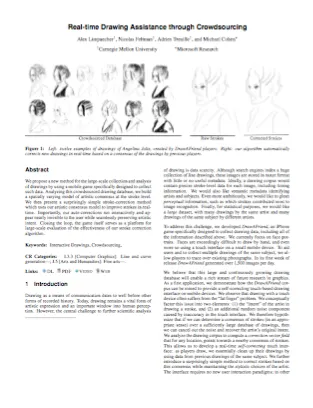
First page of the Real-Time Drawing Assistance paper

Real-Time Drawing Assistance Through Crowdsourcing

ACM Transactions on Graphics 32(3) · SIGGRAPH 2013

We propose a new method for the large-scale collection and analysis of drawings by using a mobile game specifically designed to collect such data. Analyzing this crowdsourced drawing database, we build a spatially varying model of artistic consensus at the stroke level. We then present a surprisingly simple stroke-correction method which uses our artistic consensus model to improve strokes in real-time. Importantly, our auto-corrections run interactively and appear nearly invisible to the user while seamlessly preserving artistic intent. Closing the loop, the game itself serves as a platform for large-scale evaluation of the effectiveness of our stroke correction algorithm.

Alex Limpaecher, Nicolas Feltman, Michael Cohen, Adrien Treuille

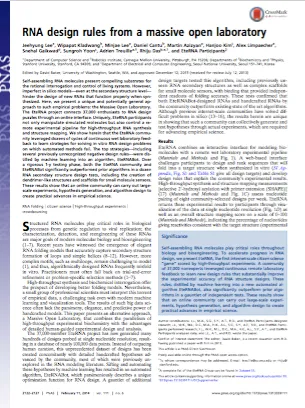
First page of the RNA design rules paper in PNAS

RNA design rules from a massive open laboratory

Proceedings of the National Academy of Sciences · Jan 2014

Self-assembling RNA molecules present compelling substrates for the rational interrogation and control of living systems. However, imperfect in silico models—even at the secondary structure level—hinder the design of new RNAs that function properly when synthesized. Here, we present a unique and potentially general approach to such empirical problems: the Massive Open Laboratory. The EteRNA project connects 37,000 enthusiasts to RNA design puzzles through an online interface. Uniquely, EteRNA participants not only manipulate simulated molecules but also control a remote experimental pipeline for high-throughput RNA synthesis and structure mapping. We show herein that the EteRNA community leveraged dozens of cycles of continuous wet laboratory feedback to learn strategies for solving in vitro RNA design problems on which automated methods fail. The top strategies—including several previously unrecognized negative design rules—were distilled by machine learning into an algorithm, EteRNABot. Over a rigorous 1-y testing phase, both the EteRNA community and EteRNABot significantly outperformed prior algorithms in a dozen RNA secondary structure design tests, including the creation of dendrimer-like structures and scaffolds for small molecule sensors. These results show that an online community can carry out large-scale experiments, hypothesis generation, and algorithm design to create practical advances in empirical science.

Jeehyung Lee, Wipapat Kladwang, Minjae Lee, Daniel Cantu, Martin Azizyan, Hanjoo Kim, Alex Limpaecher, Sungroh Yoon, Rhiju Das, Adrien Treuille and EteRNA Participants

Figure from the Where Do People Draw Lines paper

Where Do People Draw Lines?

ACM Transactions on Graphics 27(3) · SIGGRAPH 2008

This paper presents the results of a study in which artists made line drawings intended to convey specific 3D shapes. The study was designed so that drawings could be registered with rendered images of 3D models, supporting an analysis of how well the locations of the artists' lines correlate with other artists', with current computer graphics line definitions, and with the underlying differential properties of the 3D surface. Lines drawn by artists in this study largely overlapped one another (75% are within 1mm of another line), particularly along the occluding contours of the object. Most lines that do not overlap contours overlap large gradients of the image intensity, and correlate strongly with predictions made by recent line drawing algorithms in computer graphics. 14% were not well described by any of the local properties considered in this study. The result of our work is a publicly available data set of aligned drawings, an analysis of where lines appear in that data set based on local properties of 3D models, and algorithms to predict where artists will draw lines for new scenes.

Forrester Cole, Aleksey Golovinskiy, Alex Limpaecher, Heather Stoddart Barros, Adam Finkelstein, Thomas Funkhouser, and Szymon Rusinkiewicz

Patents

Microsoft Research logo

Cloud-connected, interactive application shared through a social network

US 20140019538 A1 · July 16, 2014

The current patent application is directed to a class of highly functional, cloud-connected, interactive applications that are well suited for distribution and execution in social-networking contexts. When executed within the contexts of browser applications running on processor-controlled electronic devices, the class of application programs to which the current patent application is directed provides for importing images and other information from a social-networking service, developing digitally encoded and electronically stored content based on the imported images and other information, and distributing the digitally encoded and electronically stored content within a social-networking environment.

Alex Limpaecher, Michael Cohen, C. Larry Zitnick

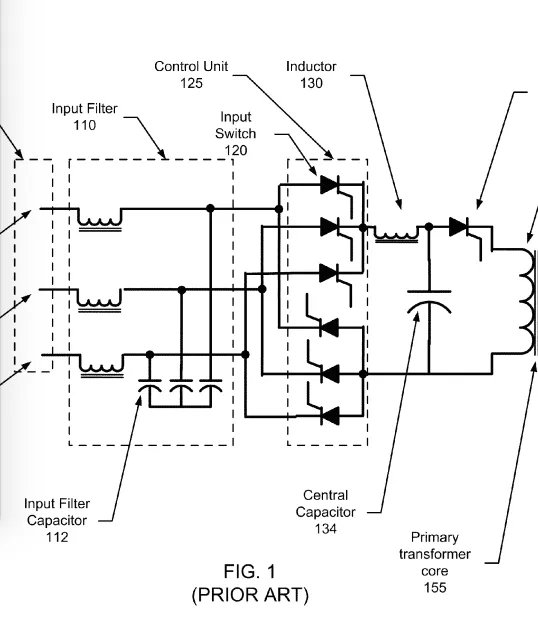
Circuit diagram from the patent

Method and system for delivering a controlled voltage

US 8,000,118 · March 15, 2015

In general, in one aspect, the invention relates to a method for delivering a controlled voltage. The method involves, during a first electric pulse delivered to a primary transformer, holding a first switching section open to isolate the controlled voltage, where the first electric pulse creates a first magnetic flux in a core of the primary transformer, and where the first magnetic flux generates a direct current (DC) magnetizing current. The method further involves receiving the controlled voltage from a voltage source using the DC magnetizing current at a first switching section, and upon termination of the first electric pulse, closing the first switching section to deliver the controlled voltage to the primary transformer.

Alex Limpaecher, Rudy Limpaecher

Recognition

Awards and Fellowships

  • Randy Pausch Memorial Fellowship for Computer Science and Fine Arts — CMU, 2010
  • National Science Foundation Fellow, 2010–2013
  • Outstanding Computer Science Senior Thesis Prize — Princeton, 2008

Schooling

Education

Carnegie Mellon School of Computer Science logo

Carnegie Mellon University

Masters — Computer Science, 2010–2013

Advisor: Adrien Treuille

Classes of Interest: Game Design, Computational Photography, Animation of Natural Phenomenon, Graduate Machine Learning, Graduate Computer Algorithms, Graduate Computer Networks, Optimizing Compilers, Graduate Programming Languages, Computational Molecular Biology and Genomics

UC Berkeley seal

UC Berkeley, 2012

Visiting Researcher, Computer Vision Group

Princeton University shield

Princeton University, 2008

BA Computer Science

Phillips Academy seal

Phillips Academy, 2004